Carbon Reduction
Aldi’s Roadmap to Net-Zero
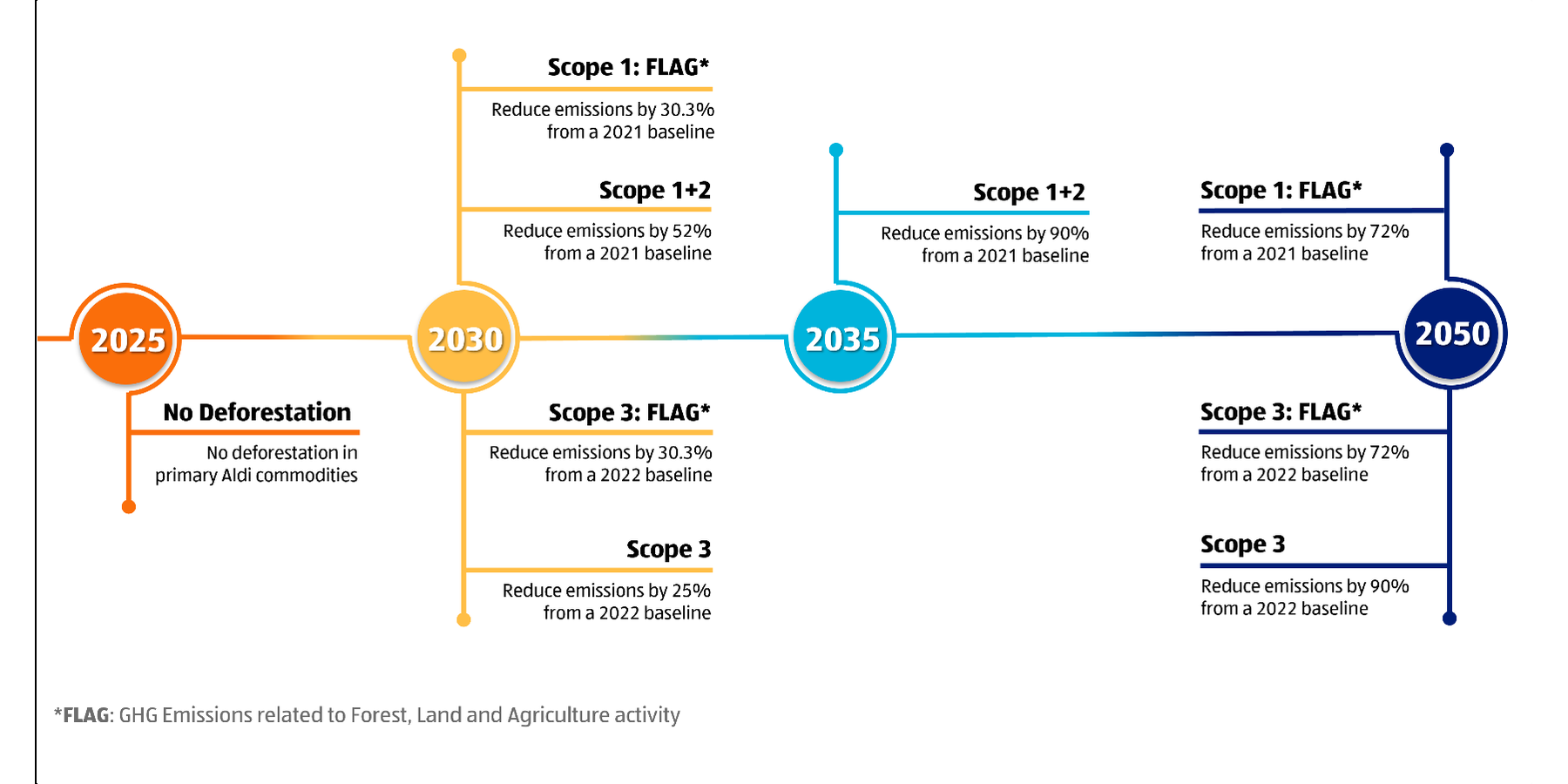
The timeline below represents the Aldi South Groups newly validated SBTi targets:
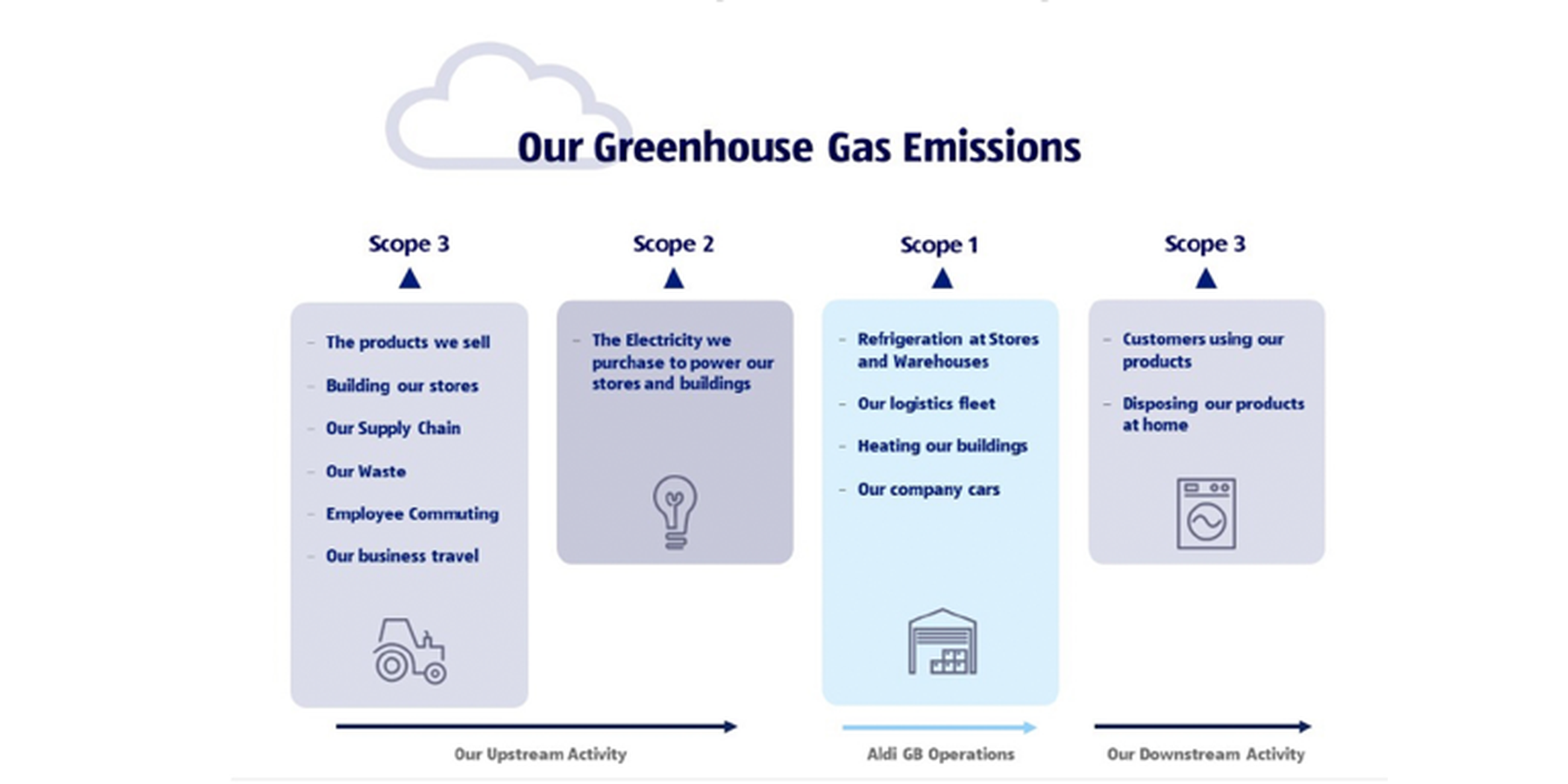
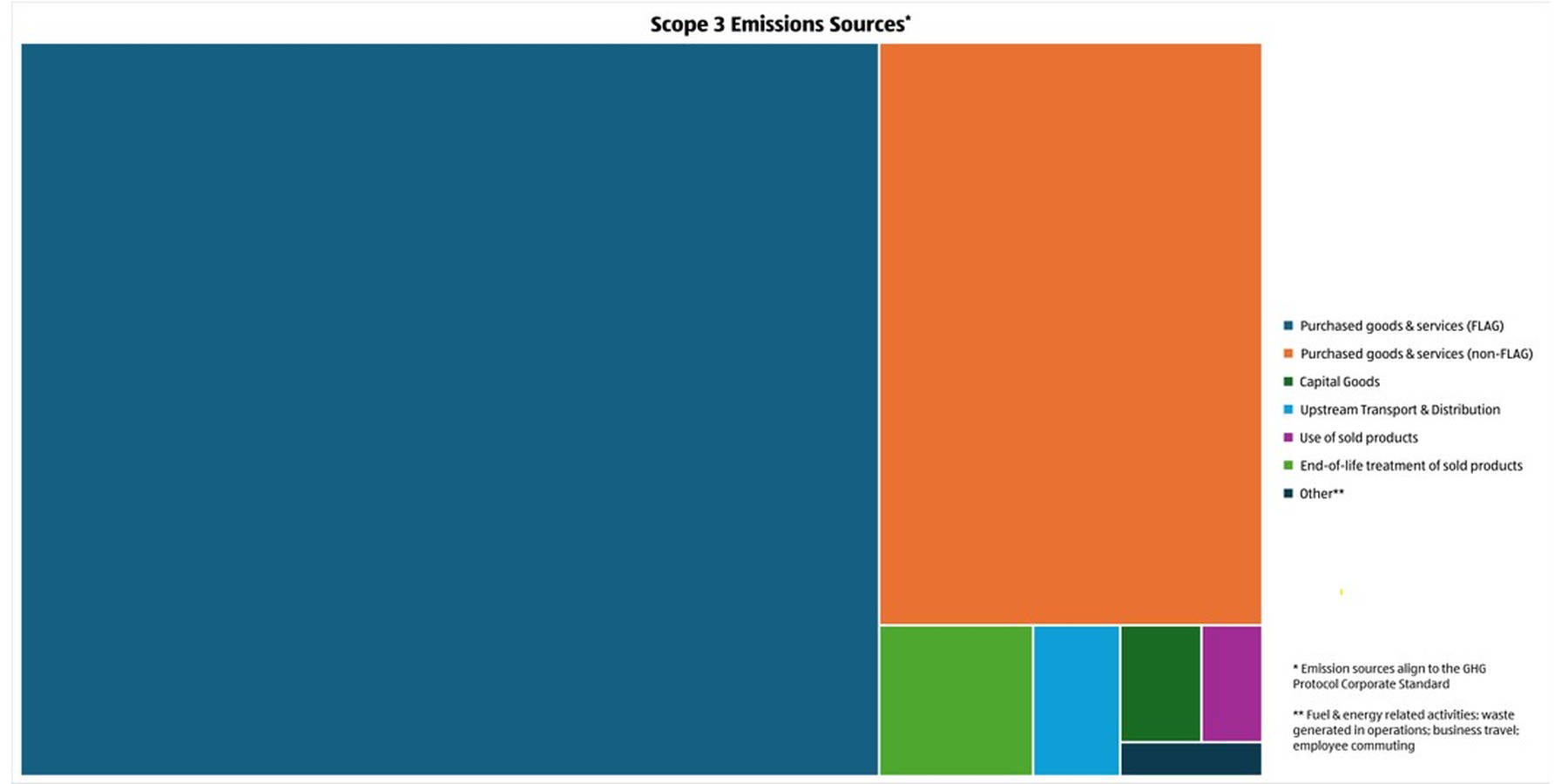
Our Greenhouse Gas Emissions (Scope 1, 2 & 3)
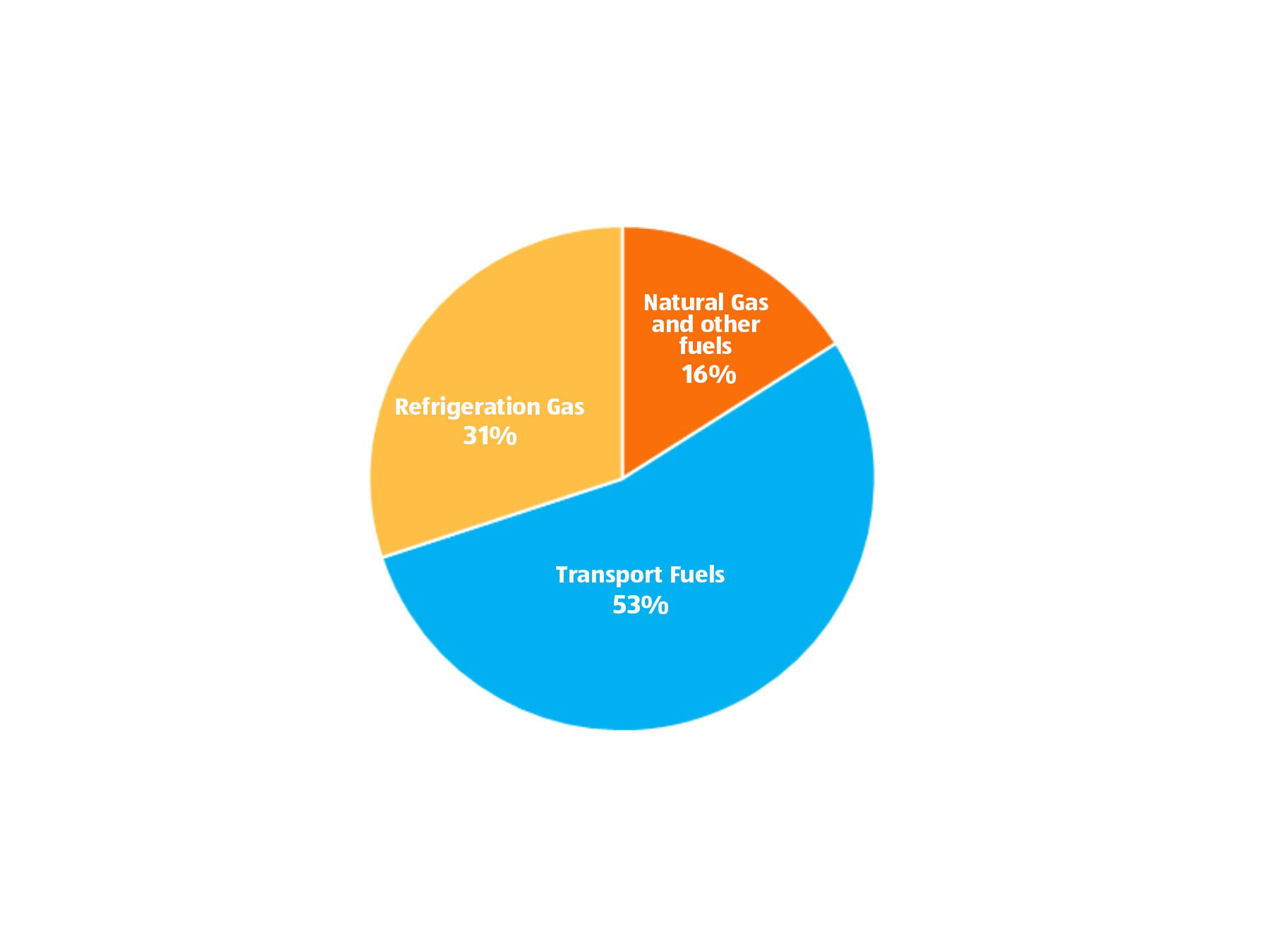
Our Operational Emissions (Scope 1 &2 )
2025 = 81,099 tC02e, 29% reduction vs 2021
Key projects in own operations
Some of the activities we’ve been working on to reduce the emissions from our own operations (Scope 1 & 2) include:
- 100% of the electricity we directly purchase is green, generated by renewable sources via the REGO certification method.
- Replacing gas heating where possible with electric.
- Converting to CO₂ refrigerant gases for our refrigerant systems, which has a much lower global warming potential.
- Transitioning our company cars to electric; over 60% of our Regional company car fleet is now electric!
- Making the switch from diesel to lower-carbon alternative fuels like CNG and HVO for our HGVs, these fuels emit up to 90% less CO₂.
We know we’re a business that needs to use energy to function but we’re trying to be as energy efficient as possible by:
- Encouraging our colleagues to be as efficient as possible in the key areas we use energy (refrigeration, lighting, heating, fleet diesel and HVO and electrical appliances) via an internal engagement programme and our ISO 50001 energy management system.
- Installing doors on fridges in our stores to reduce the electricity use of our refrigeration.
Key projects in supply chain emissions
We’re working hard to reduce the emissions related to our products, their journey to stores and how they’re used in our customers’ homes. A few of our reduction initiatives include:
- Encouraging suppliers that account for 75% of our Scope 3 emissions to set Science Based Targets (SBTs), in line with a 1.5°c warming scenario
- Championing our customers to reduce their emissions by offering tips in our Specialbuy leaflets to save energy and reduce waste
- Rolling out our national supplier climate engagement strategy to drive emissions reductions in our value chain.
- Working alongside Supplier Leadership on Climate Transition (LOCT) to build on the climate-related education of our suppliers.
Sustainable Development Goals
When defining our goals and priorities, we consider the UN Sustainable Development Goals (SDGs). The two SDGs supported by our carbon reduction efforts discussed on this page are 7: Affordable and Clean Energy and 13: Climate Action.